+86-13031705107
Consulting phone

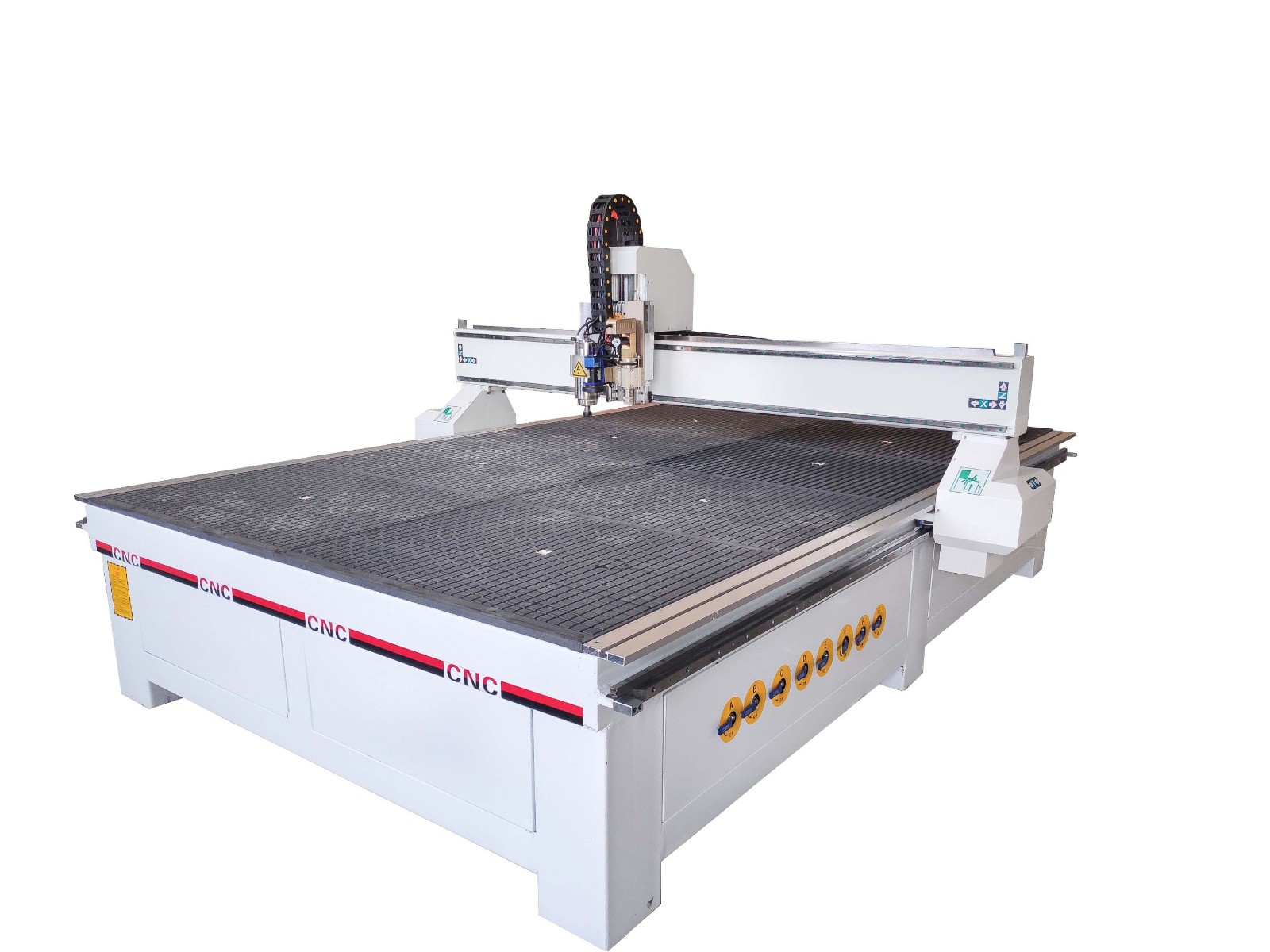
Model | GS-1325K |
X .Y Axis working area | 1300X2500mm |
Z-Axis working area | 200mm |
Repeatability | 0.025(+/-mm) |
Max Cutting Speed | 25000mm/min |
Rapid Traverse | 35000mm/min |
Spindle power rate | 4.5KW(air cooled) |
Controller | Markcut V8 |
Accessory | CCD carema |
Spindle rotating speed | 0-24000rpm |
command | G code*.u00*.mmg*plt |
Work Mode | Hybrid servo motor (leashine) |
Transmission | X Y helical rack gear,Z ball screw |
Guide way | Linear guide way(hiwin) |
Power | AC380V/50~60Hz |
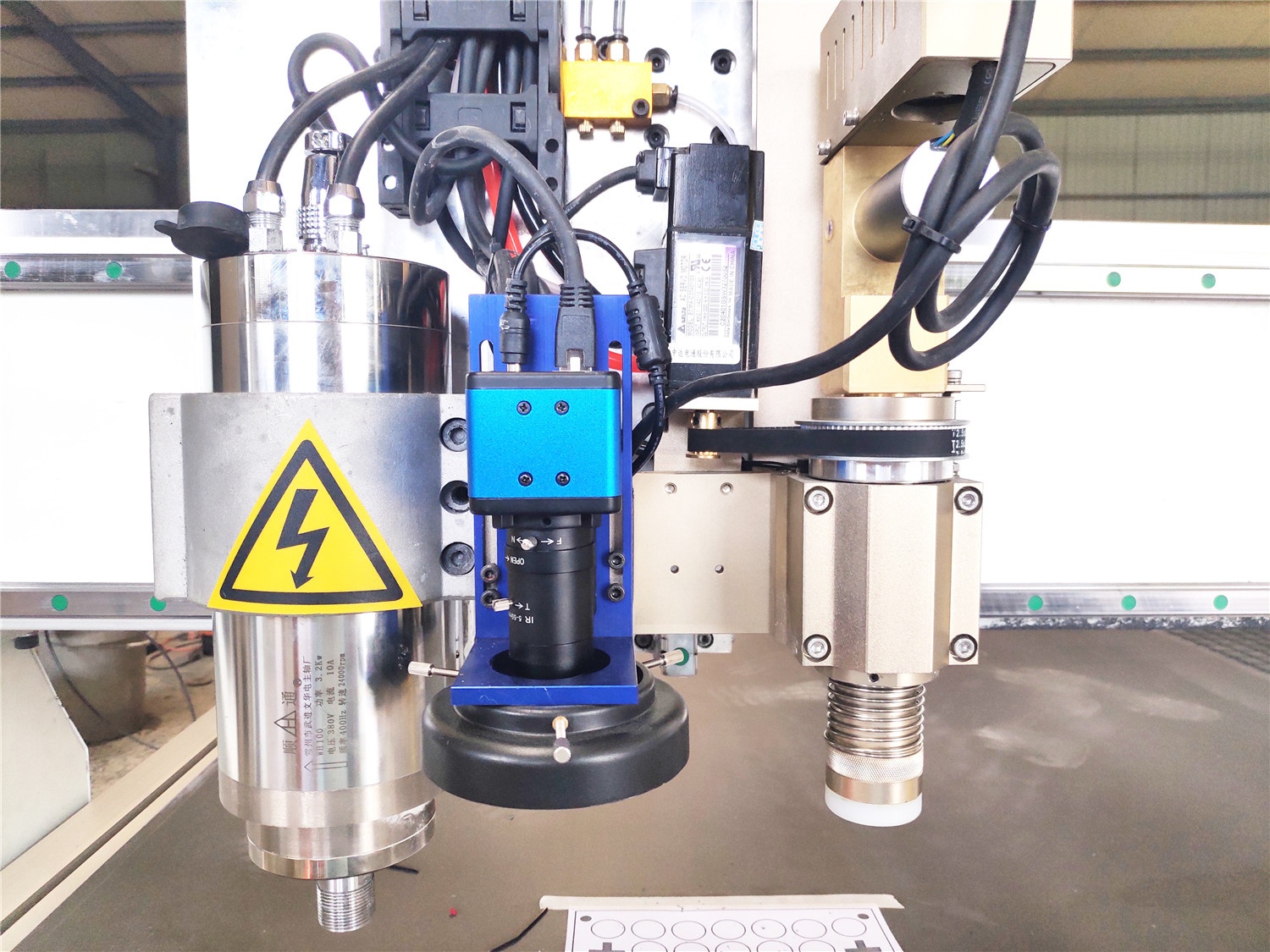
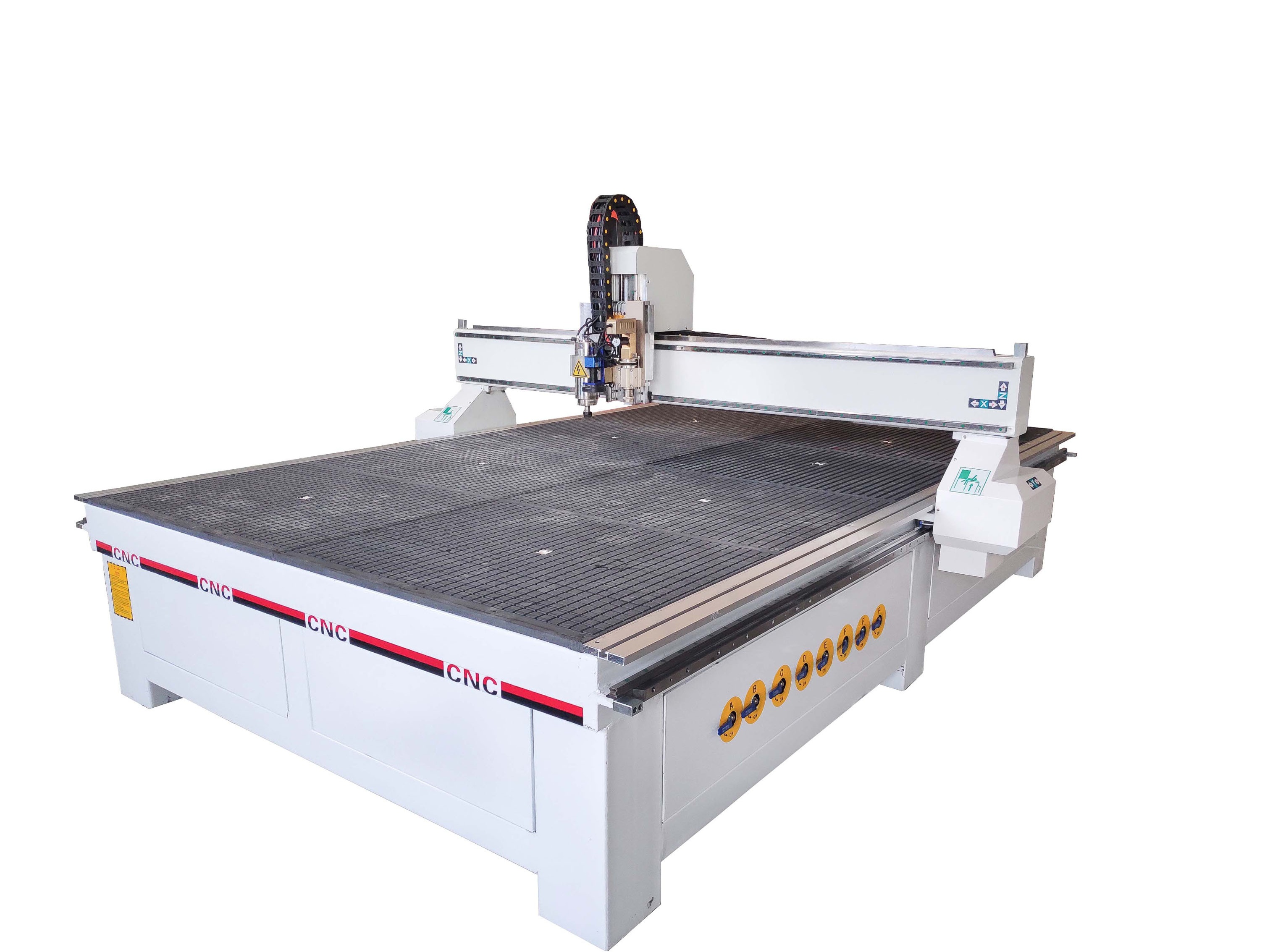
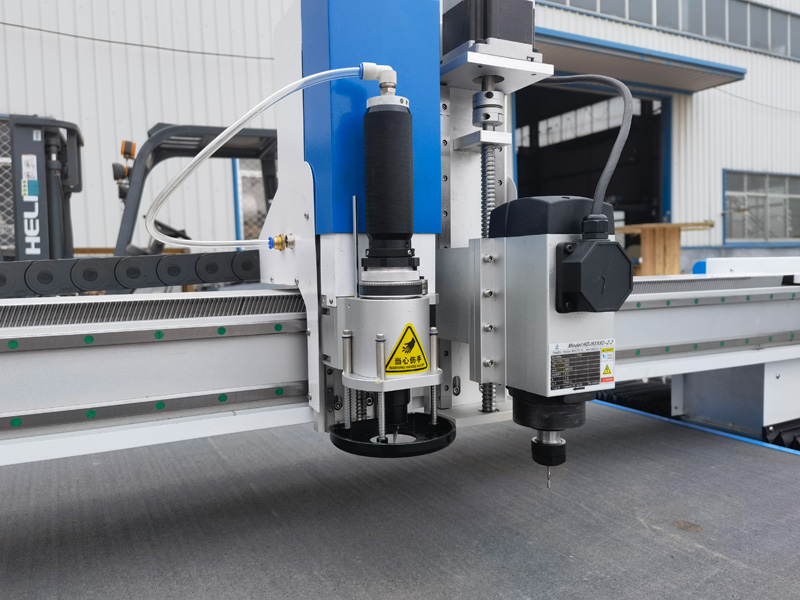
• Comes with an intelligent cutting head, tools can be changed according to requirements and all kinds of gaskets can be cut effectively with strong practicability.
• All electrical components and pneumatic components use well-known brand products to ensure the stability and reliability of the whole machine for long-term use.
• The equipment has high cutting precision and extremely small error, which meets the strict requirements of gasket production for precision.
• Pneumatic knife cutting, the cutting surface is smooth and round, no secondary processing is required, and it can be used directly, reducing the production process and improving production efficiency.
• The cutting accuracy of this machine is 0.01mm, the reset accuracy is 0.01mm, the product error is ±0.03mm, and the cutting surface smoothness can be reached, which can greatly save the waste material of multi-cavity.
• Vacuum adsorption of the cut products, so that the finished products have higher precision.
• Automatic feeding device is optional, which can realize continuous feeding, realize long-span cutting, unlimited theoretical cutting length, improve production efficiency, and have a high degree of automation.
• According to the customer's product requirements, various knife can be choose.
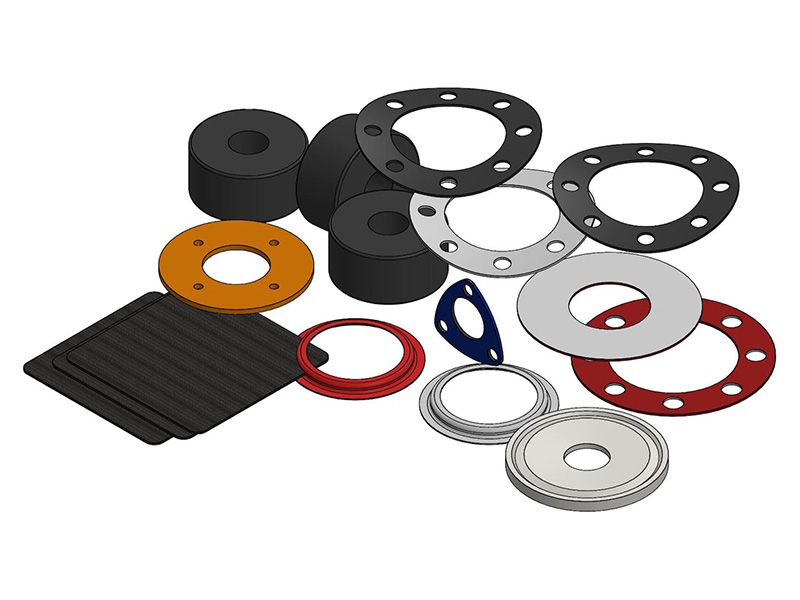
CNC gasket cutters can cut a variety of gaskets, including cork rubber gasket, non asbestos gasket, rubber gasket, graphite seal gasket, reinforced gasket without air pollution, no burnt edge, it can also cut fabric, leather, cardboard, plastic, paper, rubber, sponge and foam.
CNC gasket cutting machines are widely used in packaging protection, advertising display, terminal insulation, model/mock up making, puzzle and pattern cutting.
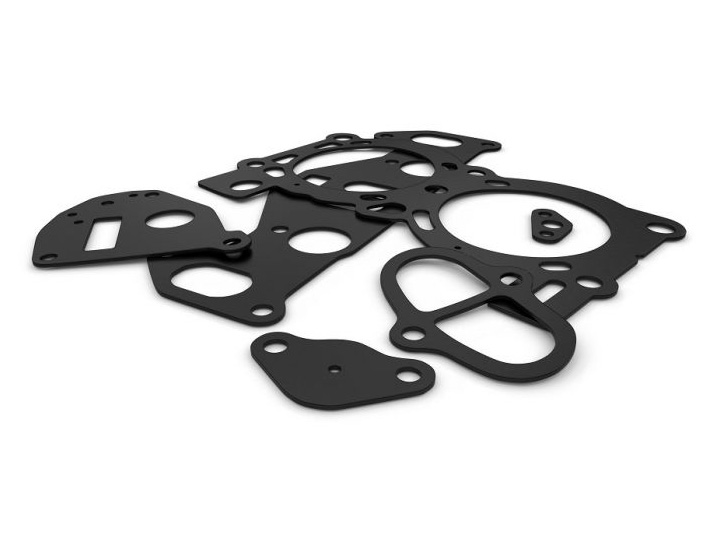
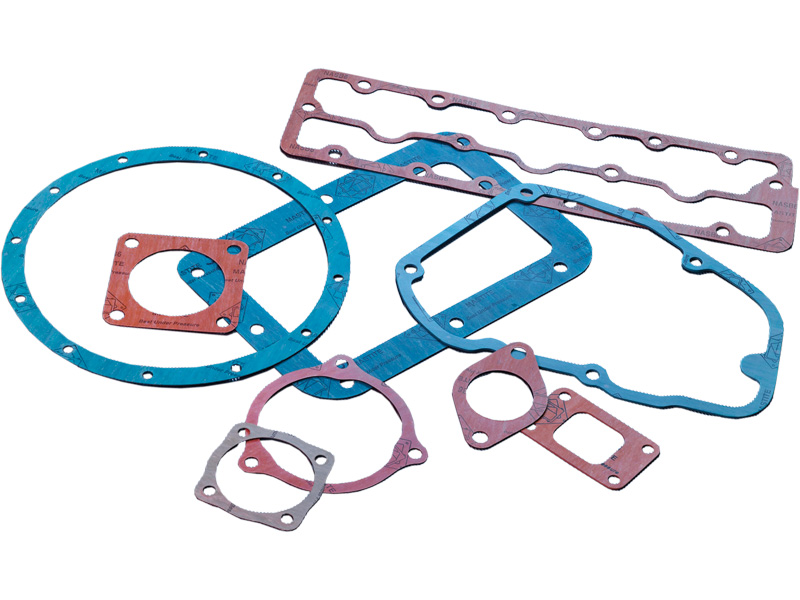
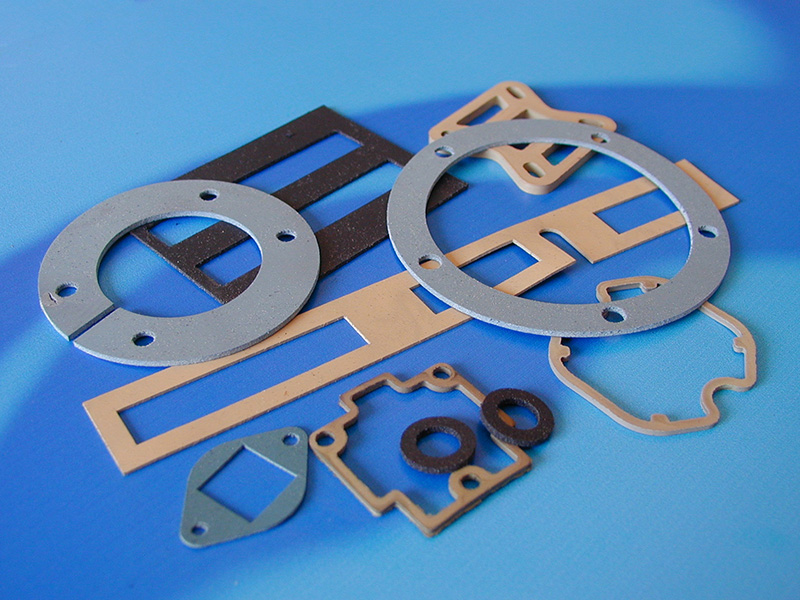
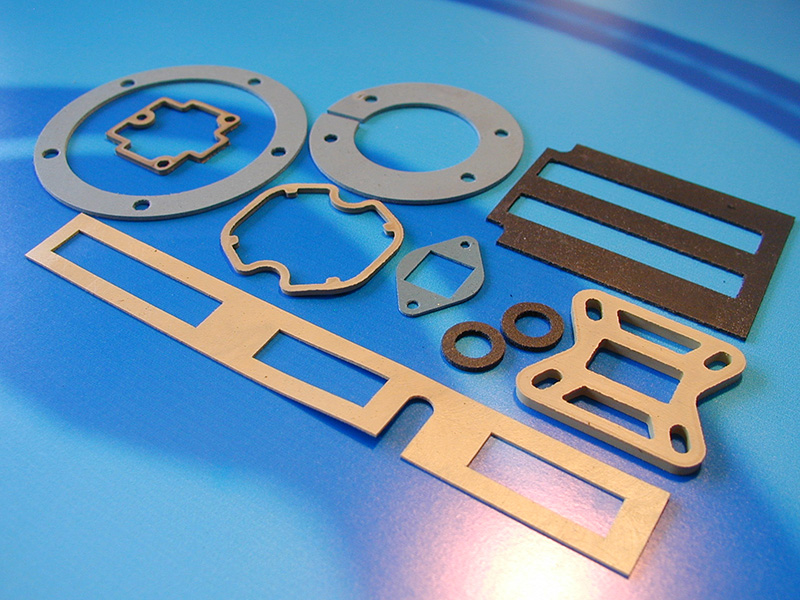
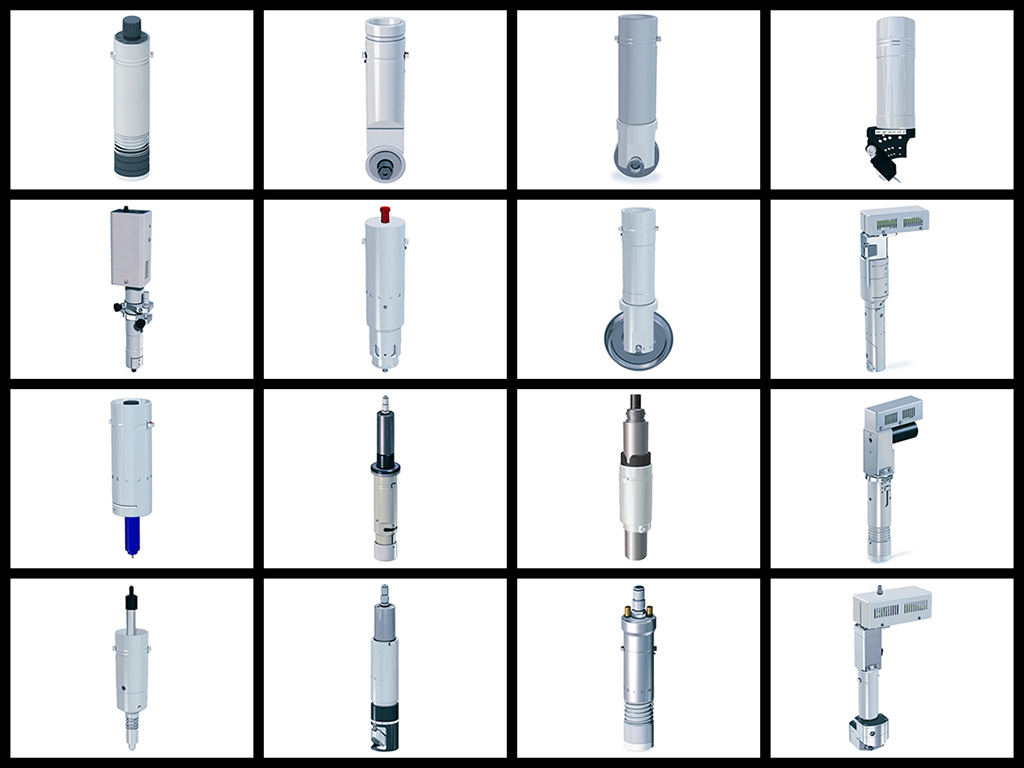
Traditional gasket production relies on die cutting or laser cutting, but both methods carry limitations that a CNC pneumatic knife cutter eliminates. Die cutting requires a custom steel-rule die for every gasket shape, with tooling costs of $500 to $3,000 per die and lead times measured in days to weeks. Any design revision means ordering a new die, making die cutting impractical for short runs, prototyping, or shops handling frequent engineering changes.
Laser cutting avoids the tooling cost but introduces heat to the material. On rubber, cork, and graphite gasket sheets, the thermal energy creates a heat-affected zone that can char edges, release fumes, and compromise the seal integrity of the finished gasket. A CNC oscillating knife delivers a cold mechanical cut with no burnt edges, no off-gassing, and tolerances within ±0.1 mm. Design files import directly from CAD as DXF or DWG, and intelligent nesting software maximizes material yield across the sheet. For shops that also process textiles and soft goods alongside gaskets, the full range of CNC Digital Knife Cutting Machines offers multi-tool heads that switch between oscillating blades, drag knives, and marking pens within the same job.
Gasket sheet stock ranges from soft silicone and cork rubber to dense non-asbestos composites and metal-reinforced graphite, and each material demands a specific blade geometry and cutting strategy. Standard oscillating blades handle soft rubber, foam, and cork gaskets up to 25 mm thick at high feed rates. For reinforced sheets and fiber-filled composites above 25 mm, a high-power pneumatic oscillating head provides the downward force and stroke frequency to cut cleanly without delaminating the material layers.
Kiss-cut mode is essential for gasket applications that require a peel-and-stick backing layer to remain intact. The blade penetrates the gasket material but stops precisely at the adhesive liner, allowing operators to peel finished gaskets directly from the sheet without manual trimming. Shops producing multiple gasket types benefit from quick-change tool holders that swap between blade profiles in seconds. A CNC Tangential Oscillating Knife Cutting Machine adds active blade rotation for sharp corners and intricate bolt-hole patterns, while a Digital Flatbed Cutting Plotter suits high-volume shops needing conveyor feeding for continuous roll-to-sheet gasket production. For applications that extend beyond gaskets into apparel and upholstery, the Digital Fabric Cutting Machine handles multi-layer textile stacks with the same precision platform.
A: CNC gasket cutters handle rubber gaskets, non-asbestos sheet gaskets, cork rubber gaskets, graphite seal gaskets, silicone gaskets, PTFE gaskets, fiber gaskets, and foam seals. The oscillating knife cuts any shape directly from a CAD file without requiring custom dies or molds.
A: Standard pneumatic oscillating knife heads cut gasket materials up to 50 mm thick. Softer materials like foam and cork cut at the upper range, while dense reinforced composites and thick rubber sheets may require a high-power oscillating head to maintain edge quality through the full depth.
A: CNC oscillating knife gasket cutters achieve positional accuracy within ±0.1 mm, matching or exceeding die-cut precision. The advantage is that this accuracy is consistent across every gasket without the gradual edge degradation that occurs as steel-rule dies wear over repeated production cycles.
A: No. Unlike laser cutting, the oscillating knife is a cold mechanical process that generates no heat at the cut edge. This eliminates charring, off-gassing, and heat-affected zones, preserving the full sealing performance of rubber, cork, and composite gasket materials.
A: Yes. CNC gasket cutters excel at single-piece prototypes and short runs because there is no tooling lead time. For higher volumes, intelligent nesting software and vacuum hold-down tables maintain consistent speed and accuracy across hundreds or thousands of parts per shift.
A: Most CNC gasket cutters import DXF, DWG, AI, PDF, and PLT file formats directly from CAD or vector design software. The nesting module arranges parts automatically to maximize sheet utilization, and the operator can adjust kerf compensation and cutting sequence before starting the job.
• Before powering on the equipment each day, please first switch on the air pump, followed by the computer and software, and finally the control cabinet. Upon completion of use, please shut down the power supply in the following sequence: first turn off the air compressor, computer, and vacuum pump; finally, turn off the main unit and the air valve switch.
• During operation, it is mandatory to promptly clean any debris or dirt from the machine tool and guide rails, and to maintain the cleanliness of the machine bed.
• If you need to leave the equipment unattended for an extended period, you must switch off the power supply to prevent accidental operation by unauthorized personnel, thereby avoiding unnecessary damage.
• The equipment should undergo a thorough cleaning once a week; particular attention should be paid to cleaning the horizontal and vertical guide rails and the drive racks, followed by the application of lubricating oil.

 中文
中文 English